Speaker: Manas Speaker from Intercax (OMG)
Event: A professional event, related to OMG (Object Management Group) and digital engineering.
Overview of Key Themes
The speaker’s presentation focused on two critical technologies poised to create an inflection point in digital engineering: Pipelines and Agent AI. The central argument was that by automating digital engineering workflows (Pipelines) and enabling natural language interaction with complex, distributed data (Agent AI), organizations can dramatically improve efficiency, observability, and accessibility of their digital threads. The presentation showcased how a common, REST API-based platform like Syndeia can power both of these technological advancements, using SysML v2 and other engineering tools as practical examples.
Pipelines for Digital Engineering Automation:
- Traditional CI/CD (Continuous Integration/Continuous Development) tools from the software world are insufficient for digital engineering because they are code-centric, assume co-located data, and lack focus on model-based actions.
- Digital engineering requires specific automation patterns like ETL (Extract, Transform, Load), automated report generation, digital thread weaving, and automated analysis/testing.
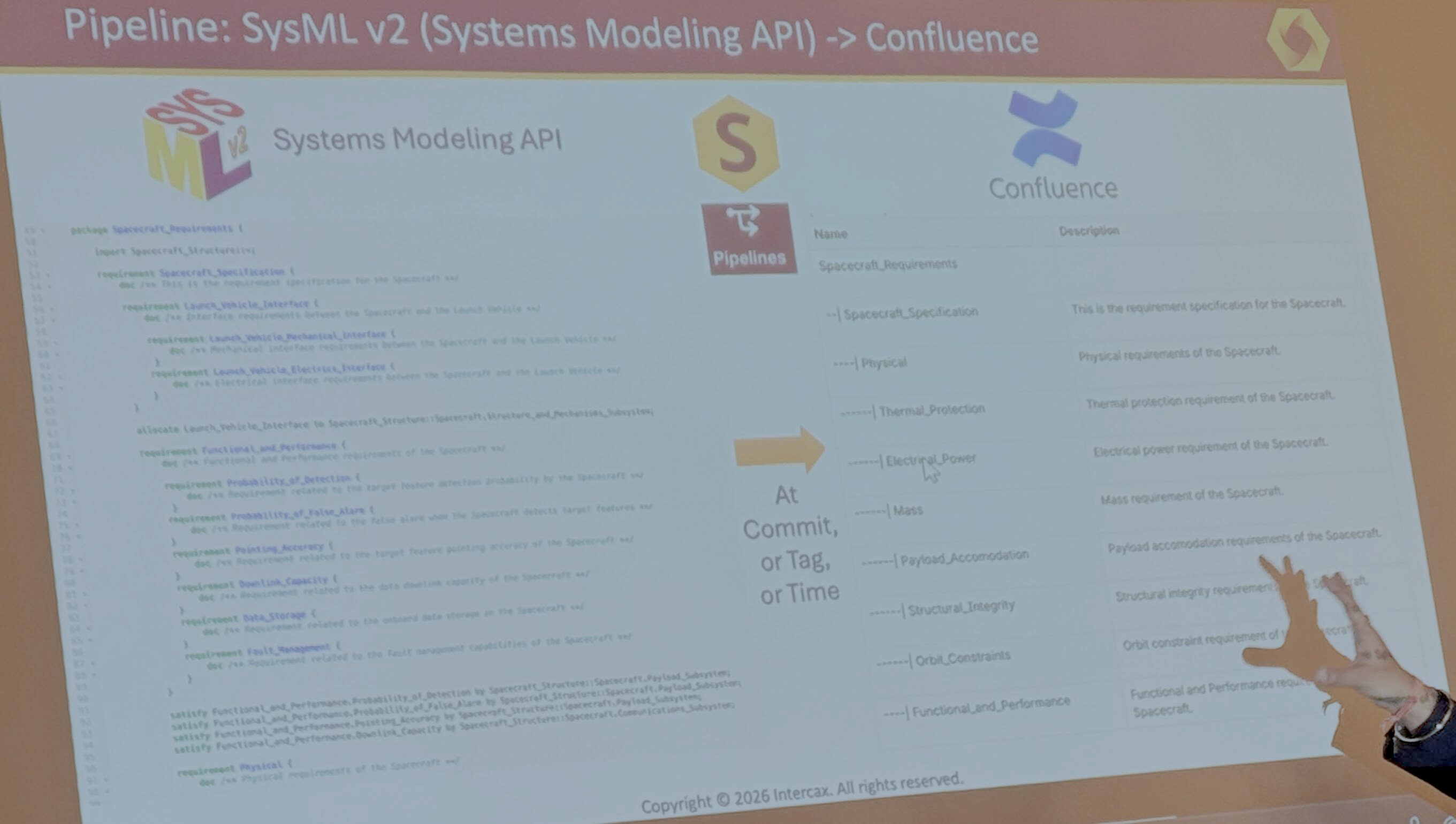
- The speaker demonstrated automated pipelines for:
- Generating a Confluence report from a SysML v2 spacecraft model.
- Extracting mass properties from a SOLIDWORKS assembly and publishing them to Confluence.
- Synchronizing a hardware architecture from a SysML v2 model to a PLM system (Windchill), dynamically creating parts and building the digital thread.
- Observability is a crucial component of pipelines. The ability to monitor run history, step duration, and failures through matrix and chart views provides critical insights for process improvement.
Agent AI for Conversational Interaction:
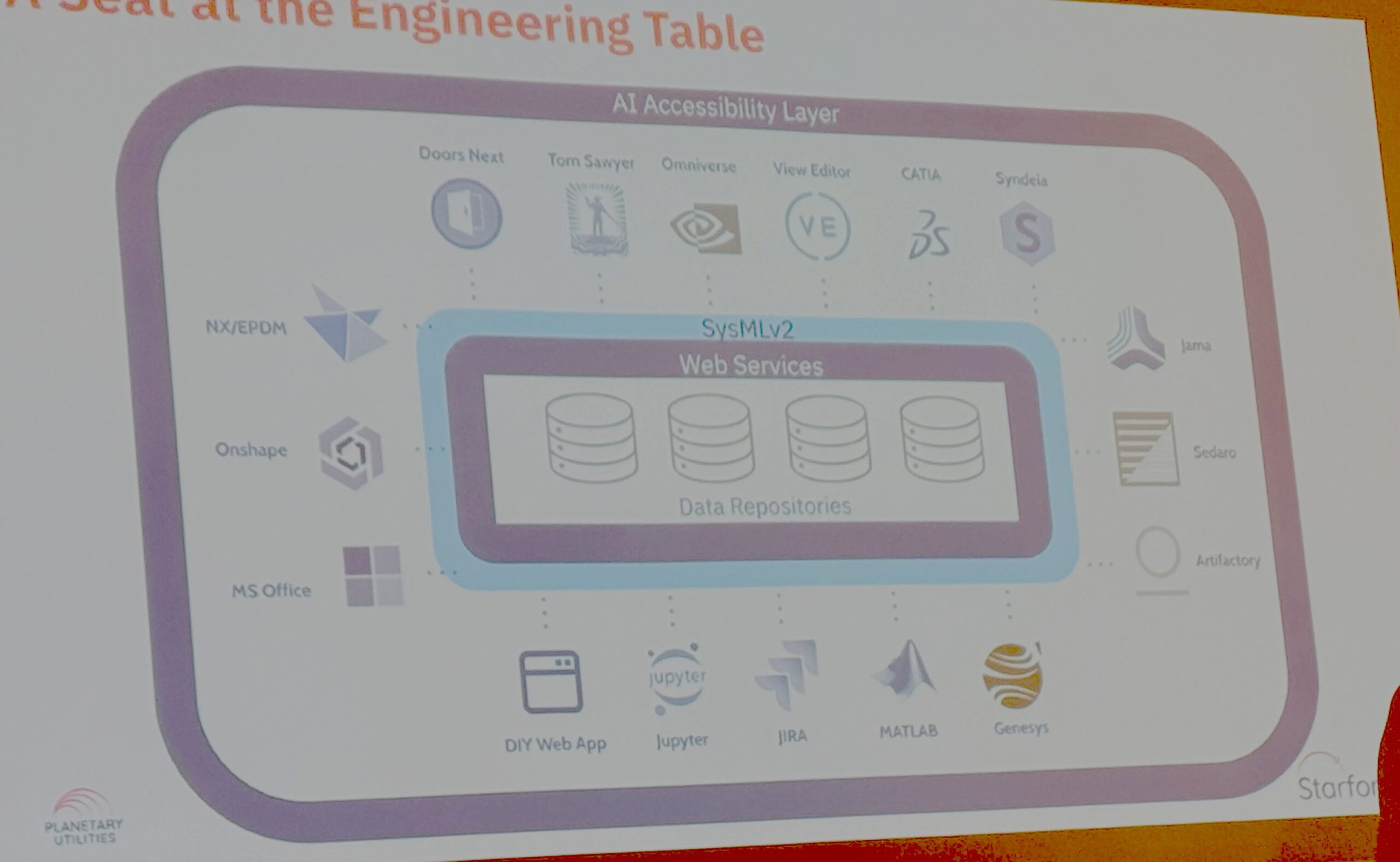
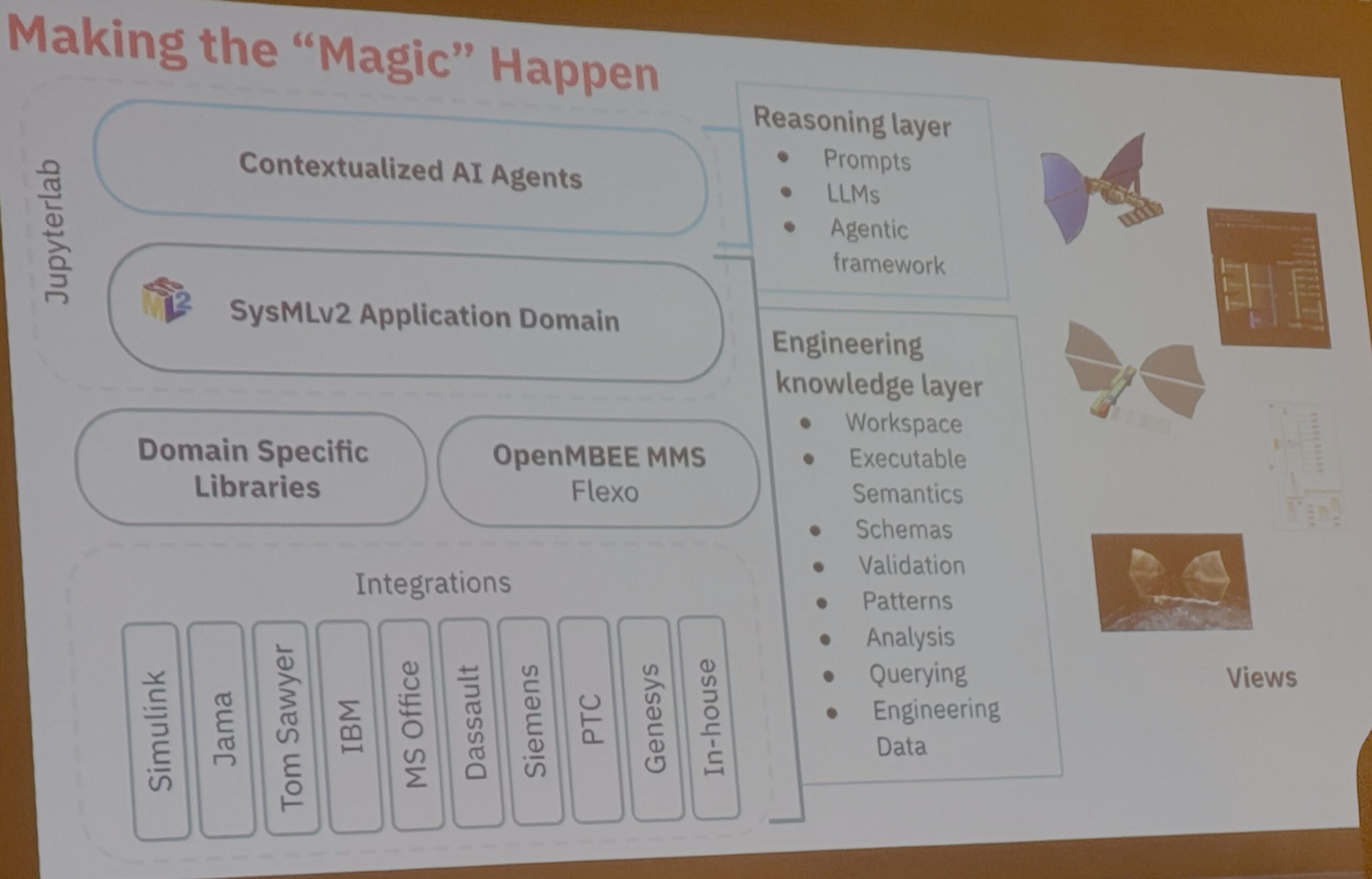
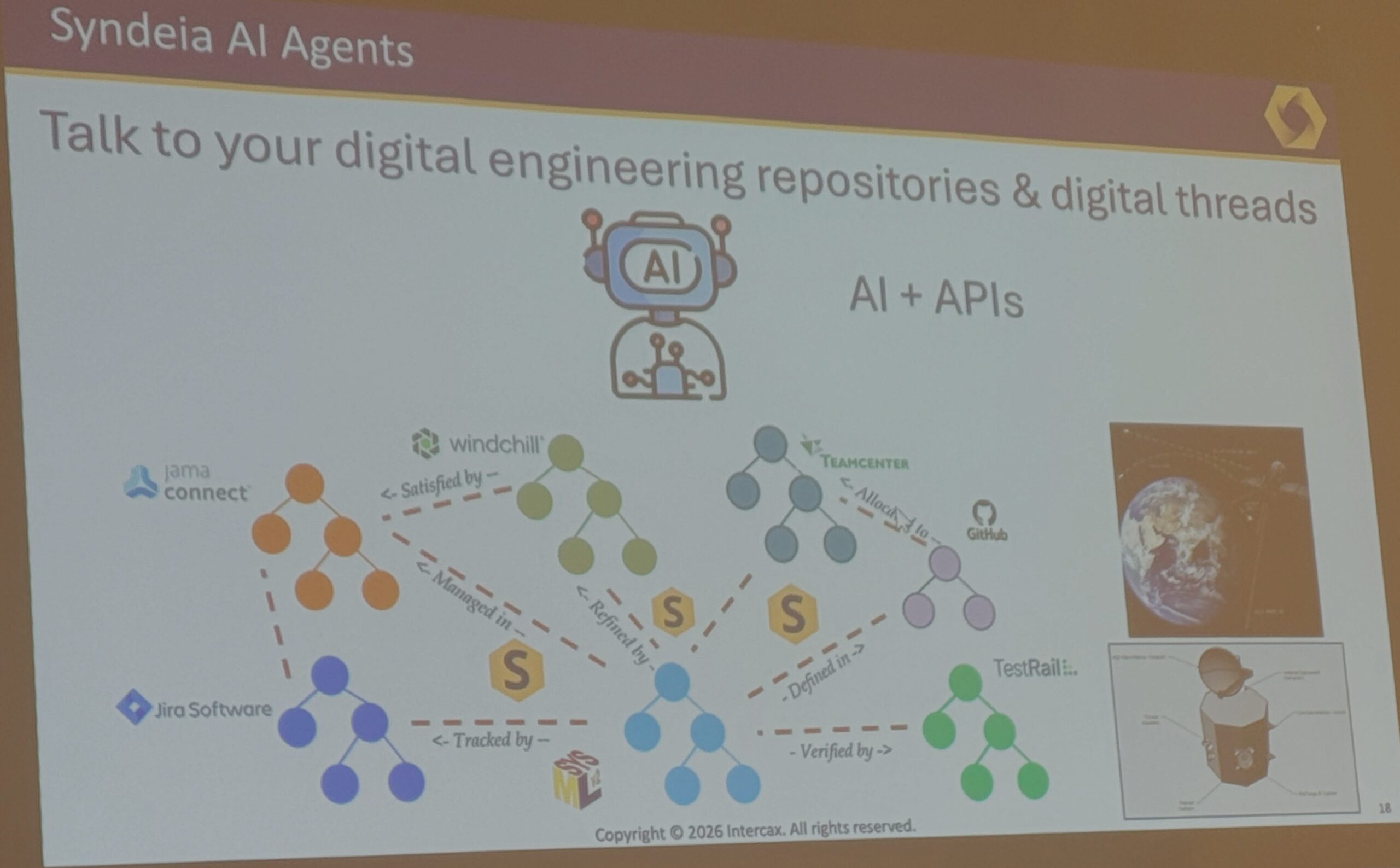
- Agent AI provides a natural language interface to interact with complex, distributed engineering data.
- These agents are powered by the same underlying REST APIs used by the automation pipelines, ensuring consistency.
- Demonstrations included:
- A SysML v2 agent capable of answering questions about a model’s structure and elements.
- A Teamcenter agent that could retrieve part information and Bills of Materials (BOMs).
- A more complex agent that could query a digital thread, find connected Jira issues, and report on their status.
- An agent that could extract structured requirements from an unstructured PDF document and prepare them for import into a modeling tool.
The Critical Role of Standardized APIs:
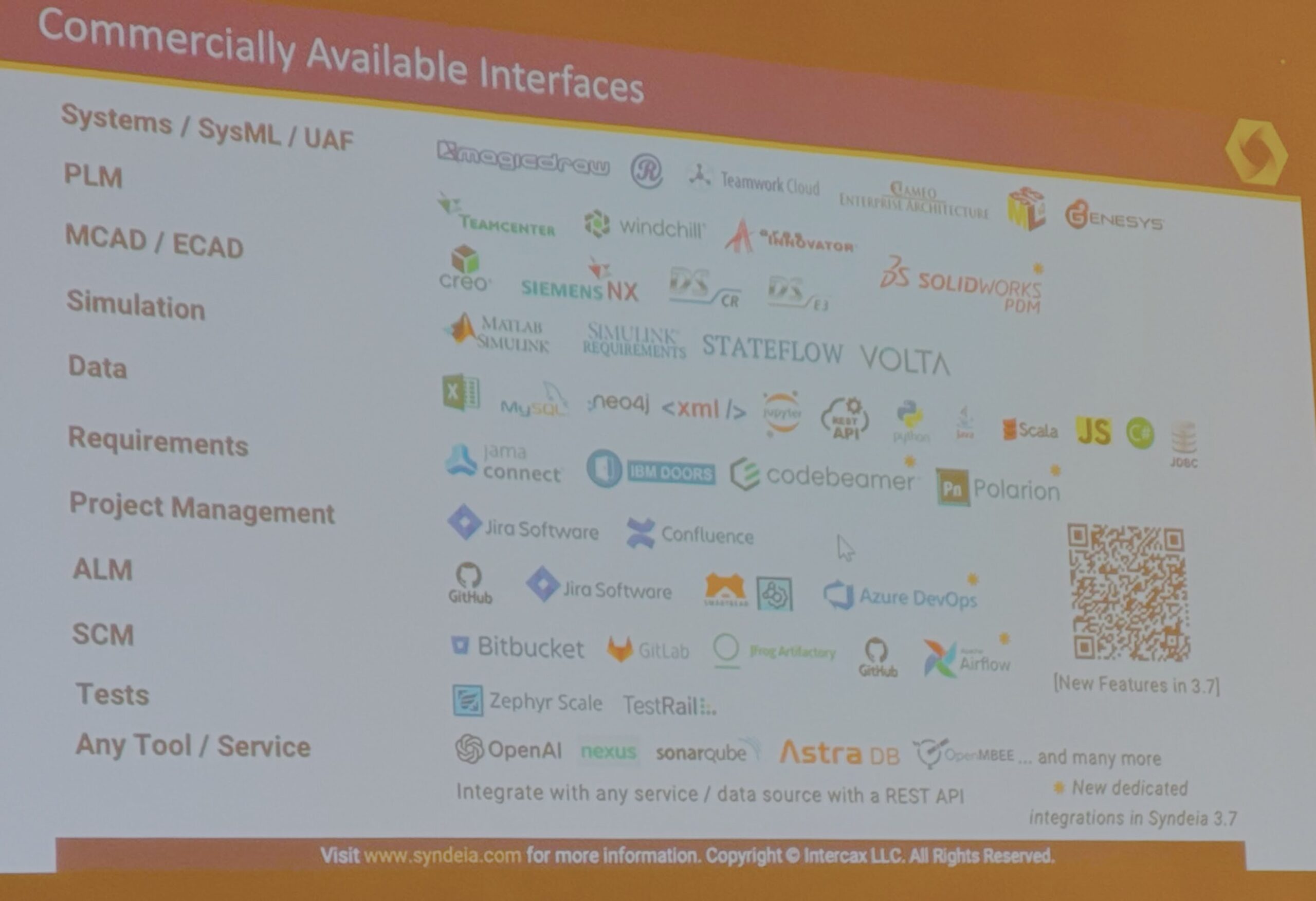
- A unified, RESTful API layer is the foundational enabler for both advanced pipelines and effective AI agents.
- The lack of robust, network-based APIs in many engineering tools is a significant barrier to building modern, integrated digital engineering ecosystems.
Distinguishing Automation from AI:
- The speaker clarified that automation and AI are not the same.
- Automation (Pipelines): Involves deterministic, pre-defined workflows where the steps are explicitly laid out.
- AI (Agentic Workflows): Involve probabilistic processes where the agent can reason, develop its own plan, and create a workflow dynamically to solve an open-ended problem.
Key Quotes
- “Today I want to talk about two crucial pieces of technology which I think are going to cause an inflection in digital engineering. Those are pipelines and agent AI.”
- “One of the biggest challenges we face when we build a product is that we often come across tools that have no APIs or have APIs that are not RESTful… that’s one request I would have for everyone is to talk to your vendors, talk to your teams. If you’re building a home-grown tool, make sure you have built interfaces and the API is that interface.”
- “It’s not only important to have an automation pipeline, but it’s important to see what happens on the pipeline, when did it run successfully, what failed… that observability is really a key part of the automation.”
- “One misconception that I would like to point out is a lot of people confuse automation and AI together. Automation is not AI.”
Action Points for the Audience
- Advocate for APIs: Push your tool vendors and internal development teams to provide and prioritize robust, modern, RESTful APIs for all engineering tools. Treat the API as a primary interface.
- Identify Automation Opportunities: Look for repetitive, manual digital engineering workflows within your organization—such as report generation, data transformation (ETL), and traceability updates—and evaluate them as candidates for pipeline automation.
- Explore Agent AI for Data Access: Consider how conversational AI agents could simplify data access for non-expert users, enabling them to query complex digital threads and models using natural language.
- Embrace Observability: When implementing automation, ensure the solution provides clear visibility and analytics into workflow performance, failures, and bottlenecks.
- Differentiate Your Approach: Understand the difference between deterministic automation (pipelines) and probabilistic AI (agentic workflows) to apply the right technology to the right problem. Use pipelines for well-defined processes and explore AI for more open-ended, complex query and analysis tasks.