Advancing Model-Based Systems Engineering with OSEM and SysML
Context: Professional session overview with a deeper-dive workshop scheduled for Tuesday morning
Overview of Key Themes
- The talk presents an update on OSEM (a rough, tailorable methodology for systems engineering) aligned with SysML, emphasizing model-based artifacts across the lifecycle.
- It positions OSEM against traditional ISO/IEC/IEEE 15288-style processes, advocating scenario-driven, top-down and bottom-up practices with strong separation of concerns.
- The methodology focuses on building a coherent B2 system model through standardized modeling patterns to improve interoperability, learning, and discipline growth.
- Management orchestration, iterative baselining, and feedback loops are highlighted as essential to controlling technical activities.
- Practical illustration via a “flashlight” example demonstrates specification, logical/physical architecture, allocation, requirements traceability, and analysis/verification artifacts.
- The initiative aims to integrate OSEM with complementary practices (e.g., Product Line Engineering) and capture the process in navigable, tailorable tooling.
Key Points and Important Details
- Model-based orientation
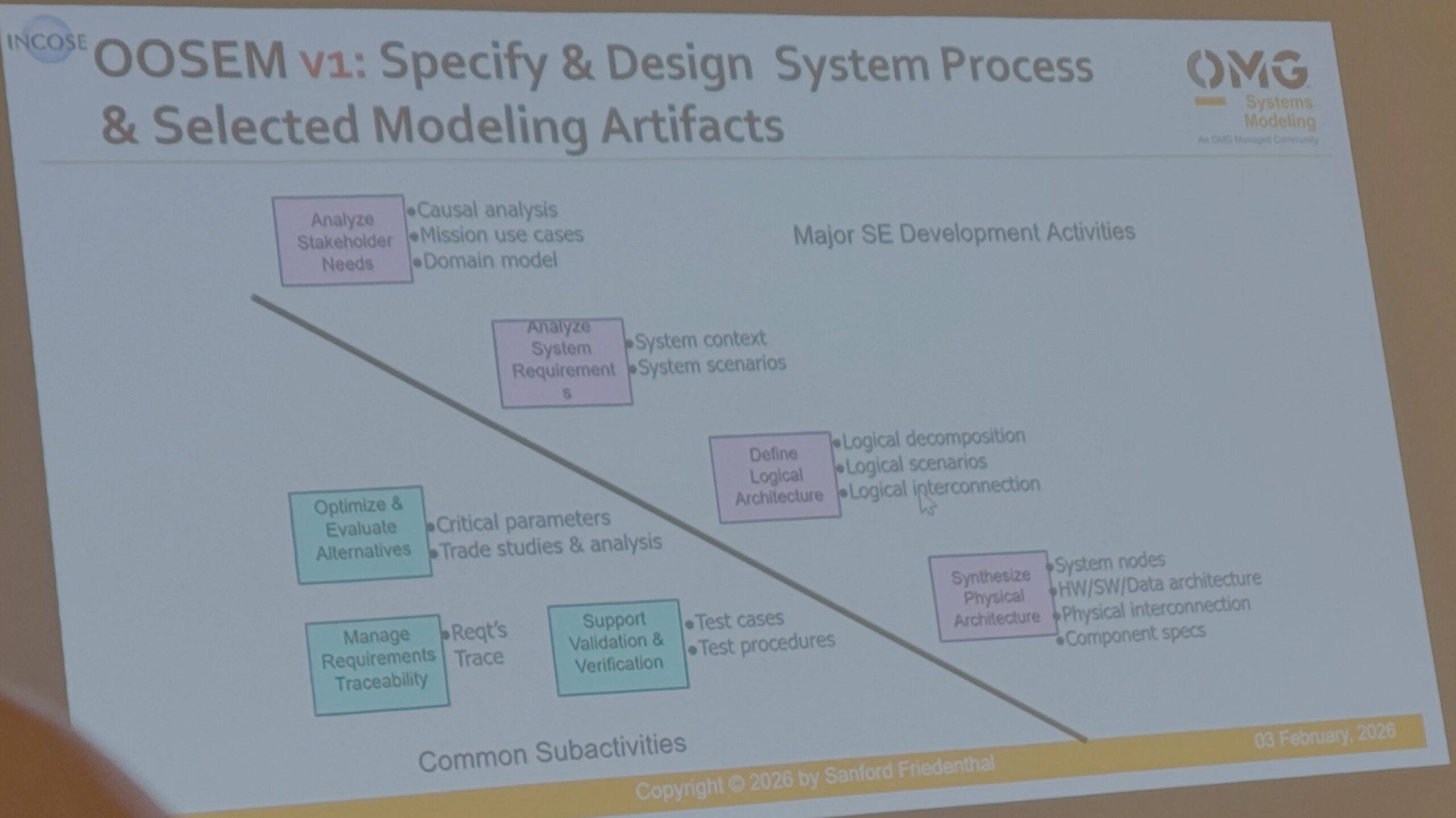
- OSEM V1 mirrors standard SE processes but differentiates itself by producing model-based artifacts at each step.
- Primary product is the B2 system model, treated as the authoritative representation of “the system.”
- Separation of concerns
- Black-box vs. white-box views; logical vs. physical; data and functionality distribution.
- Structured allocation from logical to physical elements to support clarity and consistency.
- Process structure and control
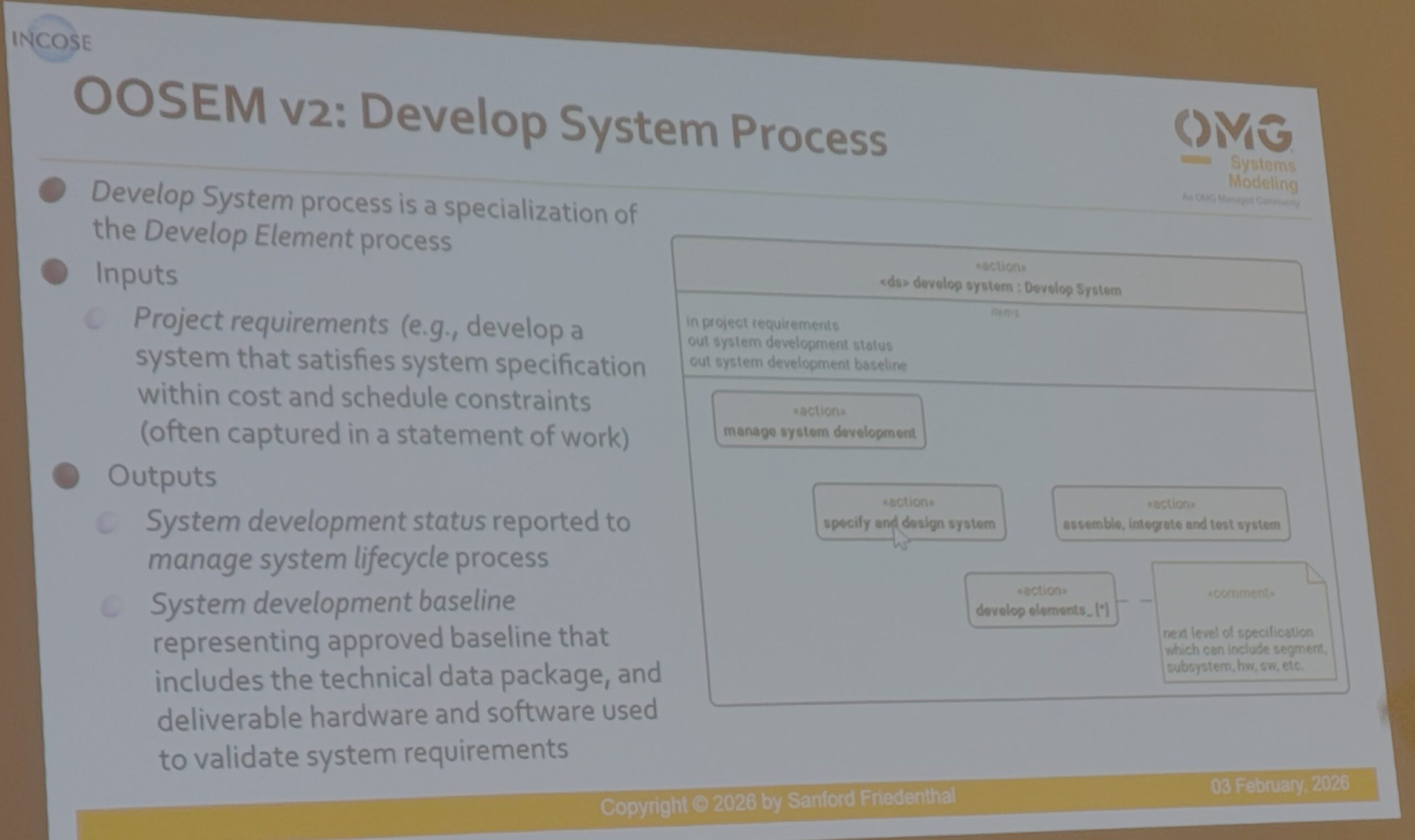
- Management process orchestrates iterations: plans work, approves technical baselines, and manages a status/control feedback loop to technical teams.
- The approach is organizationally neutral—activities are later allocated to a Work Breakdown Structure for flexibility.
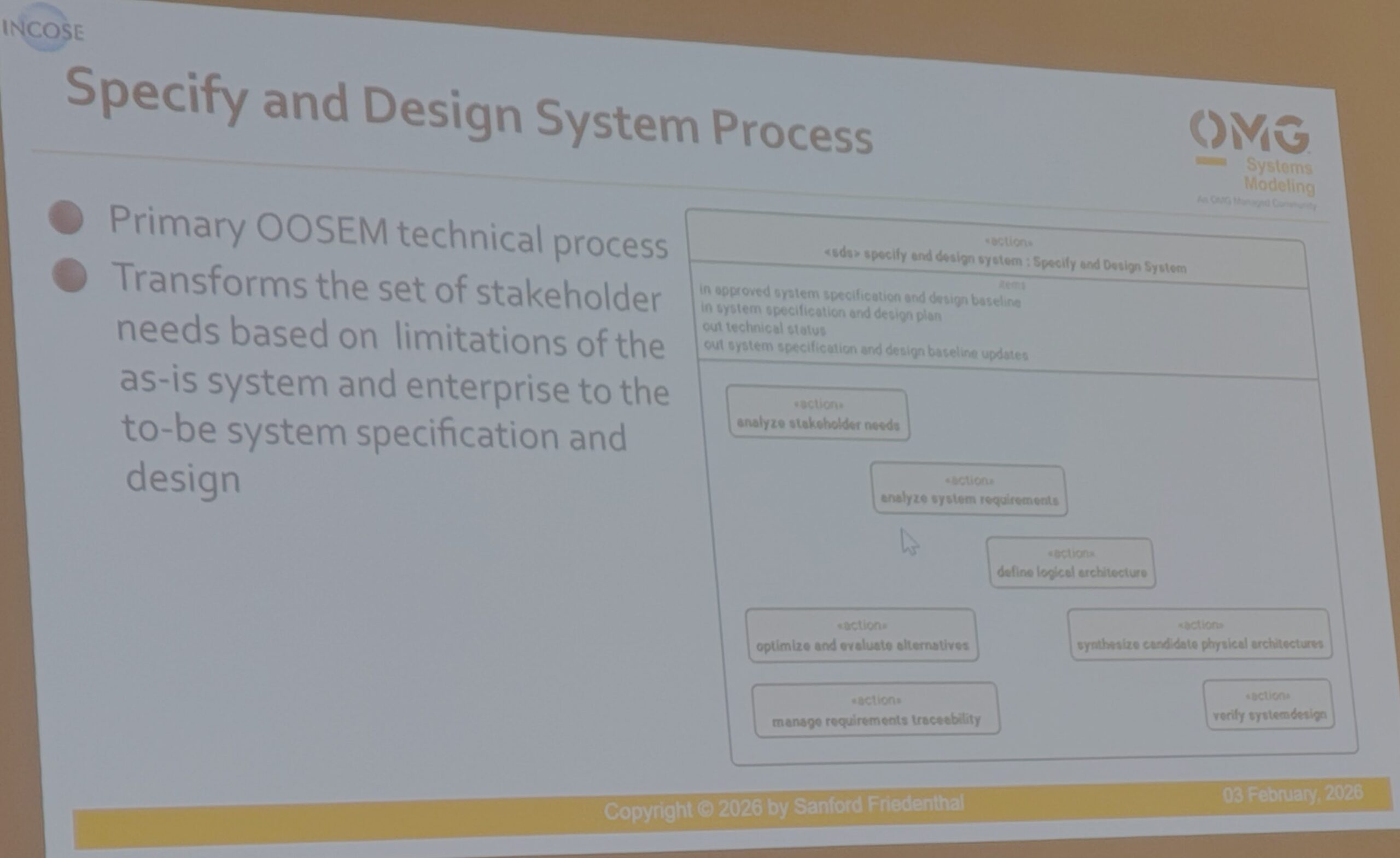
- Technical activities (high level)
- Stakeholder needs, requirements management and traceability, system design, and verification refactoring.
- Verification of system design is handled through iterative analysis and moved alongside design activities; hardware/software verification occurs via dedicated integration and test.
- Artifact-driven development
- Use cases linking users, environment, and system to mission requirements (e.g., illumination requirements for a flashlight).
- Specification and design packages capturing black-box characteristics, logical/physical models, allocations, states, properties, actions, and requirement satisfaction.
- Analysis and verification artifacts accumulated to mature the B2 model.
- Tailoring guidance
- Tailor by lifecycle phase, project size, domain, and team experience.
- Identify processes and modeling artifacts to include/exclude; align terminology to organizational standards.
- Define lifecycle model (e.g., incremental vs. waterfall) and sequence actions locally; the rough methodology specifies inputs/outputs but not sequencing.
- Allocate actions/artifacts to organizational roles and responsibilities.
- Integration and standardization initiatives
- Ongoing integration with Product Line Engineering (PLE), led by Charlie Crute, revealing needed specification updates for PLE use cases.
- Commitment to establishing standard modeling patterns to avoid fragmentation, enable interoperability, and foster shared learning.
- Tooling and method capture
- Need to capture the process in an appropriate tool (e.g., Cameo or similar) for navigation and tailoring.
- Prior V1 process model was successfully captured in Eclipse Process Framework (EPF), demonstrating modularity and navigability.
Key Quotes
“It’s scenario-driven and emphasizes separation of concerns.”
“The primary product of OSEM is your building of a B2 model… the primary object of what we call the system.”
“OSEM is a rough methodology… you want to tailor it based on lifecycle phase, project size, and domain.”
“As you step through your systems engineering process, you build up your system through a series of model-based artifacts.”
“The management process produces a plan and approves the technical baseline for each iteration… it’s a control loop.”
“Verification of the system design was refactored—handled through iterative analysis alongside design.”
“We want to establish well-defined modeling patterns… without them, we’ll never get interoperability.”
“We want to capture this process in an appropriate tool… where it’s really navigable and tailorable.”
Action Points for the Audience
- Adopt a model-based mindset: ensure each SE activity produces concrete model artifacts that accumulate into a B2 system model.
- Apply separation of concerns: use black-box/white-box views, and maintain clear logical-to-physical allocations.
- Tailor the methodology: align terminology, select relevant processes/artifacts, and define local sequencing to fit your lifecycle and organization.
- Strengthen management orchestration: implement iterative baselining with feedback loops to control technical progress.
- Standardize modeling patterns: collaborate to define and use common SysML patterns for structure, behavior, allocation, and verification.
- Integrate related practices: explore PLE integration with your OSEM approach and provide feedback on specification gaps.
- Invest in tooling: capture your tailored process in navigable, tailorable tools (e.g., EPF, Cameo) to support reuse, traceability, and team adoption.
- Prepare for the deep-dive: attend the Tuesday morning session to review detailed activities, refactoring decisions, and artifact examples.